TMAP parameter group: Contaminants in bird eggs (in CD). Measurement of chemical contamination in bird eggs. Parameters include heavy metals as well as multiple organic substances, e.g. PCB's. The trilateral Monitoring and Assessment Program was established in 1994 and contains 28 chemical, biological, geological and common parameter. Analyses enable an assessment on the trilateral agreed ecological targets. Results are published as Quality status report regularly. Investigations are done with regard to the following issues of concern primarily (Kellermann, A. et al. 1994): - Effects of climate change on the morphology, - Effects of pollutant inputs (nutrients and contaminants) on processes, species and communities, - Effects of fisheries on species and communities, - Effects of recreational activities on species, - Effects of agricultural utilization on salt marsh communities.
TMAP parameter group: Contaminants in bird eggs (in CD). Measurement of chemical contamination in bird eggs. Parameters include heavy metals as well as multiple organic substances, e.g. PCB's. The trilateral Monitoring and Assessment Program was established in 1994 and contains 28 chemical, biological, geological and common parameter. Analyses enable an assessment on the trilateral agreed ecological targets. Results are published as Quality status report regularly. Investigations are done with regard to the following issues of concern primarily (Kellermann, A. et al. 1994): - Effects of climate change on the morphology, - Effects of pollutant inputs (nutrients and contaminants) on processes, species and communities, - Effects of fisheries on species and communities, - Effects of recreational activities on species, - Effects of agricultural utilization on salt marsh communities.
TMAP parameter group: Contaminants in bird eggs (in CD). Measurement of chemical contamination in bird eggs. Parameters include heavy metals as well as multiple organic substances, e.g. PCB's. The trilateral Monitoring and Assessment Program was established in 1994 and contains 28 chemical, biological, geological and common parameter. Analyses enable an assessment on the trilateral agreed ecological targets. Results are published as Quality status report regularly. Investigations are done with regard to the following issues of concern primarily (Kellermann, A. et al. 1994): - Effects of climate change on the morphology, - Effects of pollutant inputs (nutrients and contaminants) on processes, species and communities, - Effects of fisheries on species and communities, - Effects of recreational activities on species, - Effects of agricultural utilization on salt marsh communities.
TMAP parameter group: Contaminants in bird eggs (in CD). Measurement of chemical contamination in bird eggs. Parameters include heavy metals as well as multiple organic substances, e.g. PCB's. The trilateral Monitoring and Assessment Program was established in 1994 and contains 28 chemical, biological, geological and common parameter. Analyses enable an assessment on the trilateral agreed ecological targets. Results are published as Quality status report regularly. Investigations are done with regard to the following issues of concern primarily (Kellermann, A. et al. 1994): - Effects of climate change on the morphology, - Effects of pollutant inputs (nutrients and contaminants) on processes, species and communities, - Effects of fisheries on species and communities, - Effects of recreational activities on species, - Effects of agricultural utilization on salt marsh communities.
TMAP parameter group: Contaminants in bird eggs (in CD). Measurement of chemical contamination in bird eggs. Parameters include heavy metals as well as multiple organic substances, e.g. PCB's. The trilateral Monitoring and Assessment Program was established in 1994 and contains 28 chemical, biological, geological and common parameter. Analyses enable an assessment on the trilateral agreed ecological targets. Results are published as Quality status report regularly. Investigations are done with regard to the following issues of concern primarily (Kellermann, A. et al. 1994): - Effects of climate change on the morphology, - Effects of pollutant inputs (nutrients and contaminants) on processes, species and communities, - Effects of fisheries on species and communities, - Effects of recreational activities on species, - Effects of agricultural utilization on salt marsh communities.
TMAP parameter group: Contaminants in bird eggs (in CD). Measurement of chemical contamination in bird eggs. Parameters include heavy metals as well as multiple organic substances, e.g. PCB's. The trilateral Monitoring and Assessment Program was established in 1994 and contains 28 chemical, biological, geological and common parameter. Analyses enable an assessment on the trilateral agreed ecological targets. Results are published as Quality status report regularly. Investigations are done with regard to the following issues of concern primarily (Kellermann, A. et al. 1994): - Effects of climate change on the morphology, - Effects of pollutant inputs (nutrients and contaminants) on processes, species and communities, - Effects of fisheries on species and communities, - Effects of recreational activities on species, - Effects of agricultural utilization on salt marsh communities.
TMAP parameter group: Mussel, cockle and shrimp fishery (FMCS). Statistics about blue mussel and shrimp fishery The trilateral Monitoring and Assessment Program was established in 1994 and contains 28 chemical, biological, geological and common parameter. Analyses enable an assessment on the trilateral agreed ecological targets. Results are published as Quality status report regularly. Investigations are done with regard to the following issues of concern primarily (Kellermann, A. et al. 1994): - Effects of climate change on the morphology, - Effects of pollutant inputs (nutrients and contaminants) on processes, species and communities, - Effects of fisheries on species and communities, - Effects of recreational activities on species, - Effects of agricultural utilization on salt marsh communities.
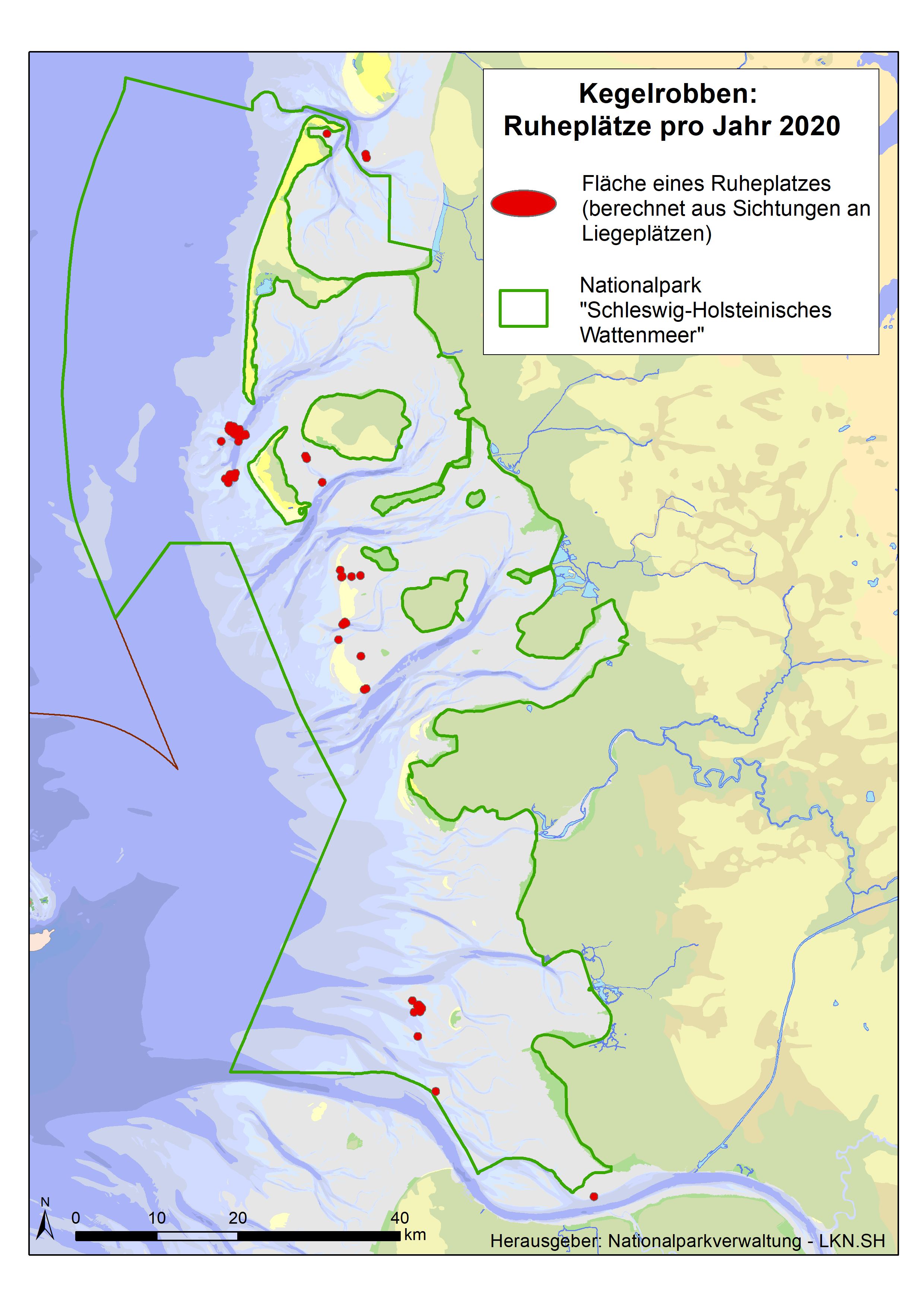
Dienstbezogener Datenbestand zu den Ruheplätzen von Kegelrobben. Ein Ruheplatz ist eine berechnete Fläche, die auf Basis einzelner Liegeplätze von Seehunden bzw. Kegelrobben generiert wird. Dazu werden die Liegeplätze pro Jahr räumlich zusammengefasst. Ein Ruheplatz wird als Kreis mit einem Radius von 500m um einen Liegeplatz (mit mind. 1 Kegelrobbe) herum definiert, wobei mehrere Liegeplätze so zu einer größeren Fläche aggregiert werden können. Der Abstand von 500m wurde gewählt, da Störungen, die mehr als 500m entfernt sind, keine oder kaum Auswirkungen auf ruhende Robben haben. Diese Flächen werden für Eingriffsplanungen benötigt, um die mit dem Eingriff verbundenen Störungen der Robben auf ein Mindestmaß zu reduzieren. Für Kegelrobben werden zur Berechnung der Ruheplätze pro Jahr Flüge vom 1.03-28.2 berücksichtigt. Bereits vor Beginn des spezifischen Kegelrobben-Monitorings im Jahr 2005 (vgl. Sichtungen an Liegeplätzen) wurden Kegelrobben zusammen mit Seehunden ab 1989 erfasst. Anders als bei den Liegeplatz-Daten fließen hier auch Erfassungen ein, die außerhalb des Monitoringzeitraums der Kegelrobben, also während Seehund-Erfassungen aufgenommen wurden.
Der Dienst beinhaltet folgende Informationen: die Lage und Größe des Ruheplatzes und den Zeitraum der Erfassungen, die in die Berechnung eingeflossen sind