TMAP parameter group: Measurement of organic micro pollutants in sediment (in CD). Organic compounds contamination in sediment The trilateral Monitoring and Assessment Program was established in 1994 and contains 28 chemical, biological, geological and common parameter. Analyses enable an assessment on the trilateral agreed ecological targets. Results are published as Quality status report regularly. Investigations are done with regard to the following issues of concern primarily (Kellermann, A. et al. 1994): - Effects of climate change on the morphology, - Effects of pollutant inputs (nutrients and contaminants) on processes, species and communities, - Effects of fisheries on species and communities, - Effects of recreational activities on species, - Effects of agricultural utilization on salt marsh communities.
TMAP parameter group: Measurement of organic micro pollutants in sediment (in CD). Organic compounds contamination in sediment The trilateral Monitoring and Assessment Program was established in 1994 and contains 28 chemical, biological, geological and common parameter. Analyses enable an assessment on the trilateral agreed ecological targets. Results are published as Quality status report regularly. Investigations are done with regard to the following issues of concern primarily (Kellermann, A. et al. 1994): - Effects of climate change on the morphology, - Effects of pollutant inputs (nutrients and contaminants) on processes, species and communities, - Effects of fisheries on species and communities, - Effects of recreational activities on species, - Effects of agricultural utilization on salt marsh communities.
TMAP parameter group: Measurement of organic micro pollutants in sediment (in CD). Organic compounds contamination in sediment The trilateral Monitoring and Assessment Program was established in 1994 and contains 28 chemical, biological, geological and common parameter. Analyses enable an assessment on the trilateral agreed ecological targets. Results are published as Quality status report regularly. Investigations are done with regard to the following issues of concern primarily (Kellermann, A. et al. 1994): - Effects of climate change on the morphology, - Effects of pollutant inputs (nutrients and contaminants) on processes, species and communities, - Effects of fisheries on species and communities, - Effects of recreational activities on species, - Effects of agricultural utilization on salt marsh communities.
TMAP parameter group: Measurement of organic micro pollutants in sediment (in CD). Organic compounds contamination in sediment The trilateral Monitoring and Assessment Program was established in 1994 and contains 28 chemical, biological, geological and common parameter. Analyses enable an assessment on the trilateral agreed ecological targets. Results are published as Quality status report regularly. Investigations are done with regard to the following issues of concern primarily (Kellermann, A. et al. 1994): - Effects of climate change on the morphology, - Effects of pollutant inputs (nutrients and contaminants) on processes, species and communities, - Effects of fisheries on species and communities, - Effects of recreational activities on species, - Effects of agricultural utilization on salt marsh communities.
TMAP parameter group: Measurement of organic micro pollutants in sediment (in CD). Organic compounds contamination in sediment The trilateral Monitoring and Assessment Program was established in 1994 and contains 28 chemical, biological, geological and common parameter. Analyses enable an assessment on the trilateral agreed ecological targets. Results are published as Quality status report regularly. Investigations are done with regard to the following issues of concern primarily (Kellermann, A. et al. 1994): - Effects of climate change on the morphology, - Effects of pollutant inputs (nutrients and contaminants) on processes, species and communities, - Effects of fisheries on species and communities, - Effects of recreational activities on species, - Effects of agricultural utilization on salt marsh communities.
TMAP parameter group: Measurement of organic micro pollutants in sediment (in CD). Organic compounds contamination in sediment The trilateral Monitoring and Assessment Program was established in 1994 and contains 28 chemical, biological, geological and common parameter. Analyses enable an assessment on the trilateral agreed ecological targets. Results are published as Quality status report regularly. Investigations are done with regard to the following issues of concern primarily (Kellermann, A. et al. 1994): - Effects of climate change on the morphology, - Effects of pollutant inputs (nutrients and contaminants) on processes, species and communities, - Effects of fisheries on species and communities, - Effects of recreational activities on species, - Effects of agricultural utilization on salt marsh communities.
TMAP parameter group: Measurement of organic micro pollutants in sediment (in CD). Organic compounds contamination in sediment The trilateral Monitoring and Assessment Program was established in 1994 and contains 28 chemical, biological, geological and common parameter. Analyses enable an assessment on the trilateral agreed ecological targets. Results are published as Quality status report regularly. Investigations are done with regard to the following issues of concern primarily (Kellermann, A. et al. 1994): - Effects of climate change on the morphology, - Effects of pollutant inputs (nutrients and contaminants) on processes, species and communities, - Effects of fisheries on species and communities, - Effects of recreational activities on species, - Effects of agricultural utilization on salt marsh communities.
Freiwillige Vereinbarung zum Schutz der mausernden Brandgänse Auszug aus der Vereinbarung zwischen Fischern / Hobbyfischern und dem Nationalparkamt: "In der Zeit vom 1. Juli bis 31. August jeden Jahres werden wegen der dort mausernden Brandenten folgende Prielströme und angrenzende Watten nicht befischt und befahren: - das Bielshövener Loch, der Flackstrom, der Dieksander Priel von drei Stunden nach bis drei Stunden vor Tidehochwasser - die Schatzkammer - die nördlichen und südlichen Seitenpriele des Klotzenlochs. [...] In der Zeit vom 1. Juni bis 31. August soll zu Seehundbänken wegen der Jungenaufzucht ein Abstand von 300 m, oder wo es möglich ist, 500 m eingehalten werden. [...] Die Vereinbarung gilt zwischen Nationalparkamt Land den unterzeichnenden Erwerbs- und Hobbyfischern."
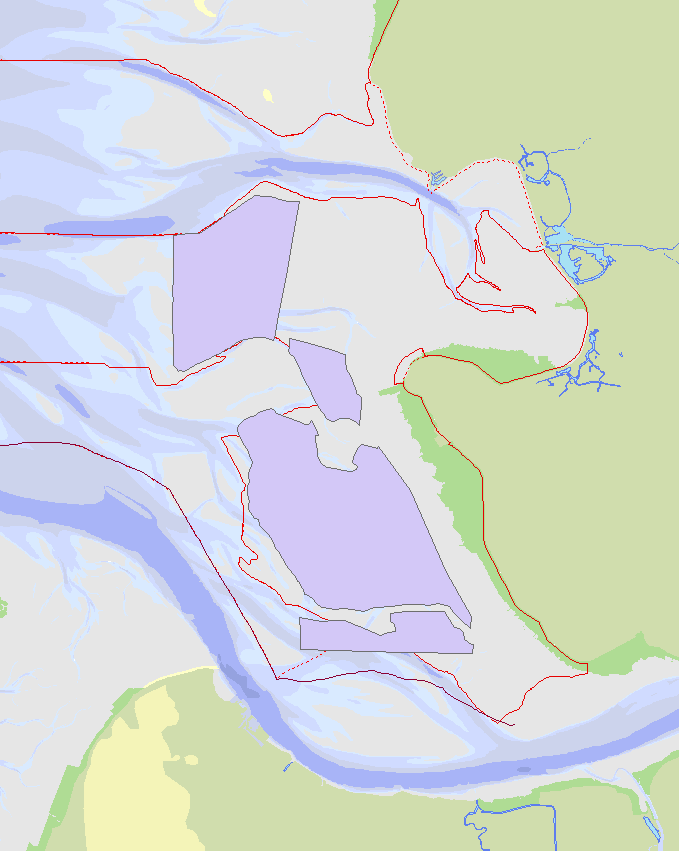
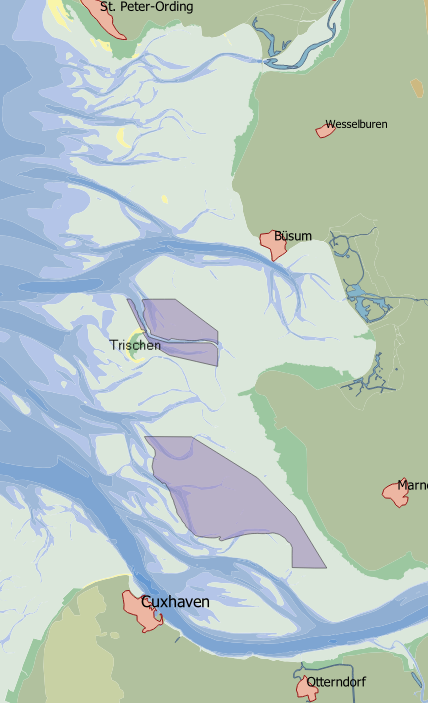
Diese Vereinbarung dient dem Schutz mausernder Vögel; insbesondere den Mausergebieten der Brandgänse. Aus der Vereinbarung: In den Monaten Juli und August eines jeden Jahres [wird] jedes Befahren folgender Gebiete [unterlassen]: Klotzenloch und Flackstrom nach Abgrenzung der vorliegenden Geoinformationen
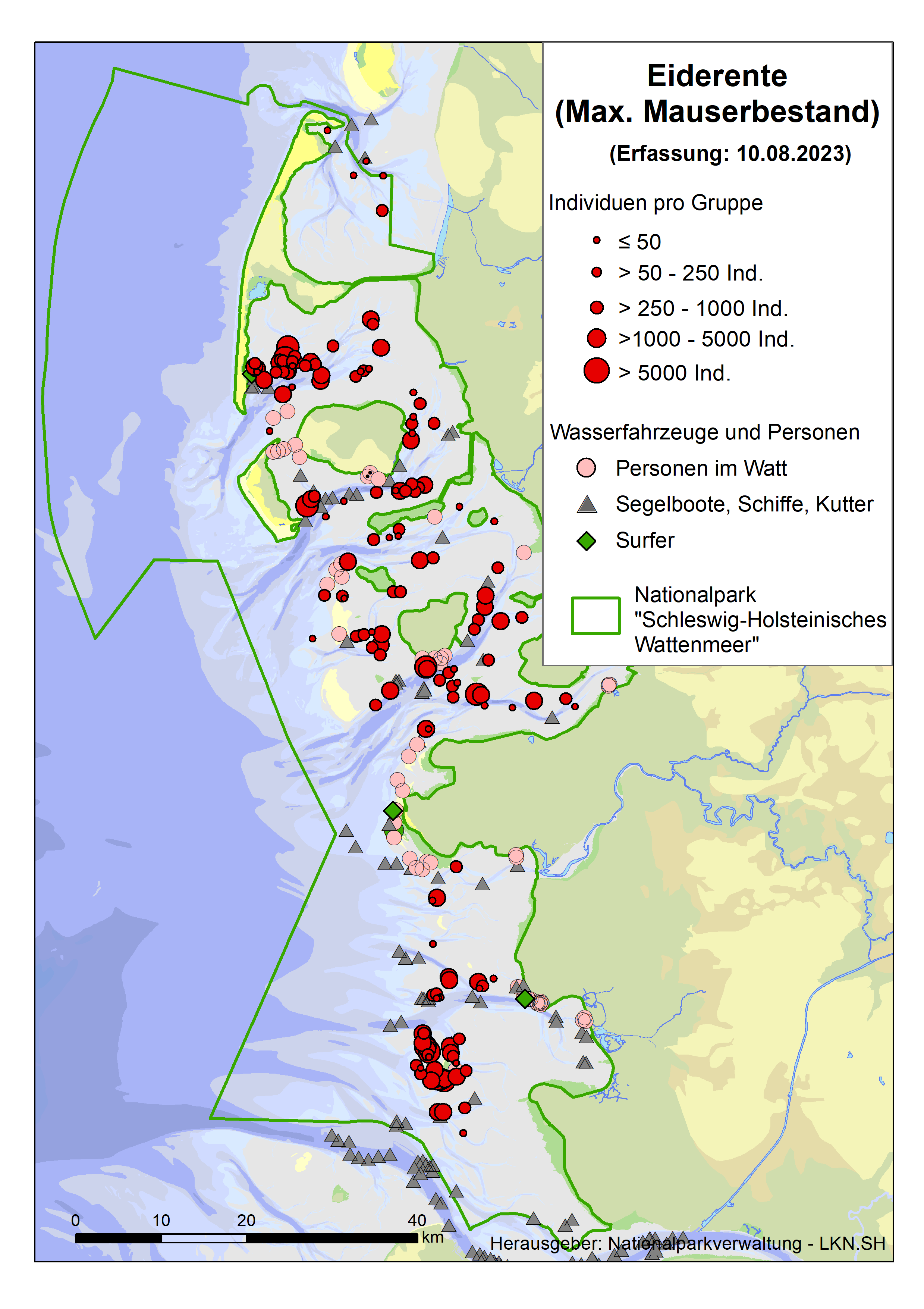
Dieser dienstbezogene Datenbestand für einen WFS-Download-Dienst stellt ab 2009 das Vorkommen und die Individuenanzahlen von Eiderenten aus Zählflügen im Bereich des Nationalparks Schleswig-Holsteinischen Wattenmeer zur Verfügung. Bei den Daten handelt es sich um Sichtungen (Individuenanzahlen) entlang einer bestimmten Flugroute (Punktdaten). Da sich die Meeresenten das ganze Jahr über in den landfernen Bereichen des Wattenmeeres (Nordfriesland und Dithmarschen) aufhalten, werden bei diesem Monitoring vier Zählungen beauftragt, um die Bestände rund um das Jahr zu erfassen. Dieser Geodatensatz des Eiderenten-Monitorings enthält die Daten aller vier Flüge ab dem Jahr 2009, so dass die Variabilität im Jahresverlauf, aber auch zwischen den Jahren abgebildet werden kann (UIG relevant). Diese Daten dienen als Basis, für weitere Datenzusammenstellungen: Winter-Bestand, max. Mauser-Bestand und Herbst -Bestand.
1. Winter-Bestand: eine Erfassung, möglichst im Januar, da zu dieser Zeit kaum Zugereignisse stattfinden, abgestimmt mit der Erfassung der Eiderenten in Niedersachsen, um eine Doppelzählung zu verhindern, falls Individuen zwischen Rastplätzen wechseln.
2. Mauser-Bestand: zwei Erfassungen zur Mauserzeit (Juli-Sept). Für Bewertungen oder fachliche Aussagen wird der Wert des maximalen Mauserbestands benötigt, so dass nur die Daten des Fluges mit der höchsten Anzahl herangezogen werden sollten.
3. Herbst-Bestand als Maximal-Bestand der Rastpopulation der Eiderenten: eine Erfassung im Oktober, da zu dieser Zeit der Herbstzug sein Maximum erreicht. Dieser Wert wird als Bestandsgröße der Rastpopulation verwendet.