TMAP parameter group: Contaminants in bird eggs (in CD). Measurement of chemical contamination in bird eggs. Parameters include heavy metals as well as multiple organic substances, e.g. PCB's. The trilateral Monitoring and Assessment Program was established in 1994 and contains 28 chemical, biological, geological and common parameter. Analyses enable an assessment on the trilateral agreed ecological targets. Results are published as Quality status report regularly. Investigations are done with regard to the following issues of concern primarily (Kellermann, A. et al. 1994): - Effects of climate change on the morphology, - Effects of pollutant inputs (nutrients and contaminants) on processes, species and communities, - Effects of fisheries on species and communities, - Effects of recreational activities on species, - Effects of agricultural utilization on salt marsh communities.
TMAP parameter group: Contaminants in bird eggs (in CD). Measurement of chemical contamination in bird eggs. Parameters include heavy metals as well as multiple organic substances, e.g. PCB's. The trilateral Monitoring and Assessment Program was established in 1994 and contains 28 chemical, biological, geological and common parameter. Analyses enable an assessment on the trilateral agreed ecological targets. Results are published as Quality status report regularly. Investigations are done with regard to the following issues of concern primarily (Kellermann, A. et al. 1994): - Effects of climate change on the morphology, - Effects of pollutant inputs (nutrients and contaminants) on processes, species and communities, - Effects of fisheries on species and communities, - Effects of recreational activities on species, - Effects of agricultural utilization on salt marsh communities.
TMAP parameter group: Contaminants in bird eggs (in CD). Measurement of chemical contamination in bird eggs. Parameters include heavy metals as well as multiple organic substances, e.g. PCB's. The trilateral Monitoring and Assessment Program was established in 1994 and contains 28 chemical, biological, geological and common parameter. Analyses enable an assessment on the trilateral agreed ecological targets. Results are published as Quality status report regularly. Investigations are done with regard to the following issues of concern primarily (Kellermann, A. et al. 1994): - Effects of climate change on the morphology, - Effects of pollutant inputs (nutrients and contaminants) on processes, species and communities, - Effects of fisheries on species and communities, - Effects of recreational activities on species, - Effects of agricultural utilization on salt marsh communities.
TMAP parameter group: Contaminants in bird eggs (in CD). Measurement of chemical contamination in bird eggs. Parameters include heavy metals as well as multiple organic substances, e.g. PCB's. The trilateral Monitoring and Assessment Program was established in 1994 and contains 28 chemical, biological, geological and common parameter. Analyses enable an assessment on the trilateral agreed ecological targets. Results are published as Quality status report regularly. Investigations are done with regard to the following issues of concern primarily (Kellermann, A. et al. 1994): - Effects of climate change on the morphology, - Effects of pollutant inputs (nutrients and contaminants) on processes, species and communities, - Effects of fisheries on species and communities, - Effects of recreational activities on species, - Effects of agricultural utilization on salt marsh communities.
TMAP parameter group: Contaminants in bird eggs (in CD). Measurement of chemical contamination in bird eggs. Parameters include heavy metals as well as multiple organic substances, e.g. PCB's. The trilateral Monitoring and Assessment Program was established in 1994 and contains 28 chemical, biological, geological and common parameter. Analyses enable an assessment on the trilateral agreed ecological targets. Results are published as Quality status report regularly. Investigations are done with regard to the following issues of concern primarily (Kellermann, A. et al. 1994): - Effects of climate change on the morphology, - Effects of pollutant inputs (nutrients and contaminants) on processes, species and communities, - Effects of fisheries on species and communities, - Effects of recreational activities on species, - Effects of agricultural utilization on salt marsh communities.
TMAP parameter group: Contaminants in bird eggs (in CD). Measurement of chemical contamination in bird eggs. Parameters include heavy metals as well as multiple organic substances, e.g. PCB's. The trilateral Monitoring and Assessment Program was established in 1994 and contains 28 chemical, biological, geological and common parameter. Analyses enable an assessment on the trilateral agreed ecological targets. Results are published as Quality status report regularly. Investigations are done with regard to the following issues of concern primarily (Kellermann, A. et al. 1994): - Effects of climate change on the morphology, - Effects of pollutant inputs (nutrients and contaminants) on processes, species and communities, - Effects of fisheries on species and communities, - Effects of recreational activities on species, - Effects of agricultural utilization on salt marsh communities.
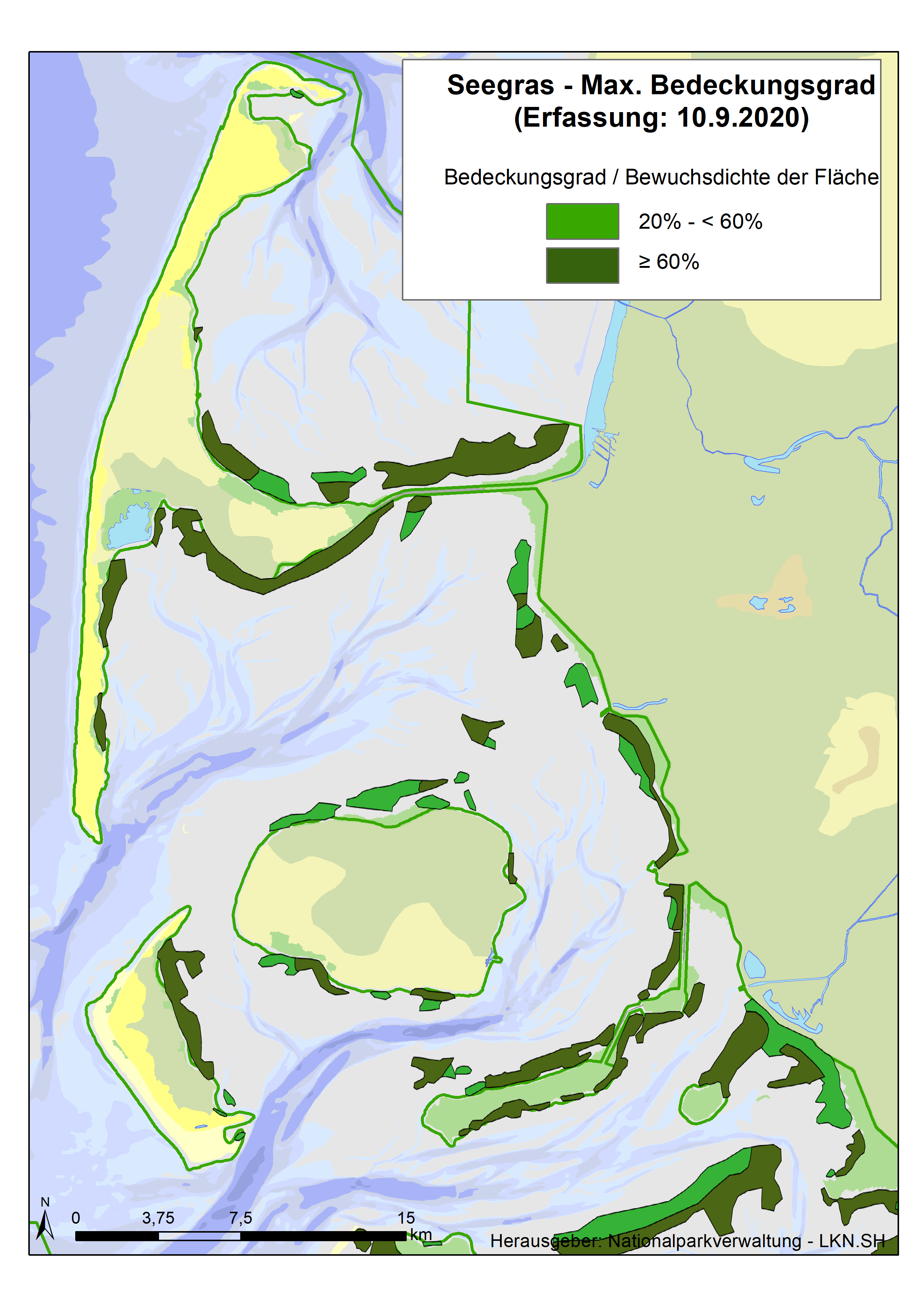
Der Darstellungs-Dienst beinhaltet folgende Eutrophierungsparameter: max. Bedeckungsgrad von Seegras bzw. Grünalgen und ist relevant für den MSRL-Deskriptor 5 im Nationalpark Schleswig-Holsteinisches Wattenmeer. Der Dienst wurde im Rahmen des Projektes MDI-DE (Marine Daten-Infrastruktur Deutschland) erstellt.
Die Daten werden im Rahmen des trilateralen Makrophyten-Monitoring-Programmes (TMAP) mittels Flugzeugkartierungen erhoben. Dieser Dienst gibt von den drei Kartierungen nur die Daten eines Fluges pro Jahr aus, bei dem der Bedeckungsgrad am höchsten war. Der Bedeckungsgrad wird in 2 Dichteklassen der geschlossenen Bestände angegeben. Die Identifizierung der Flächen ist erst ab ca. 20% Deckung möglich. Die Daten wurden auf Basis einzelner Shapes in einer Datenbank zusammengeführt. Aus den Jahren 1989 und 1990 liegen ähnliche, aber in der Klassifikation abweichende, Kartierungen im Rahmen der Ökosystemforschung Schleswig-Holsteinsches Wattenmeer vor.
Dieser Dienst stellt sowohl für Seegras als auch für Grünalgen eine Kartenansicht der max. Bedeckung ab dem Jahr 1994 mit einzelnen Jahres-Layern bereit.
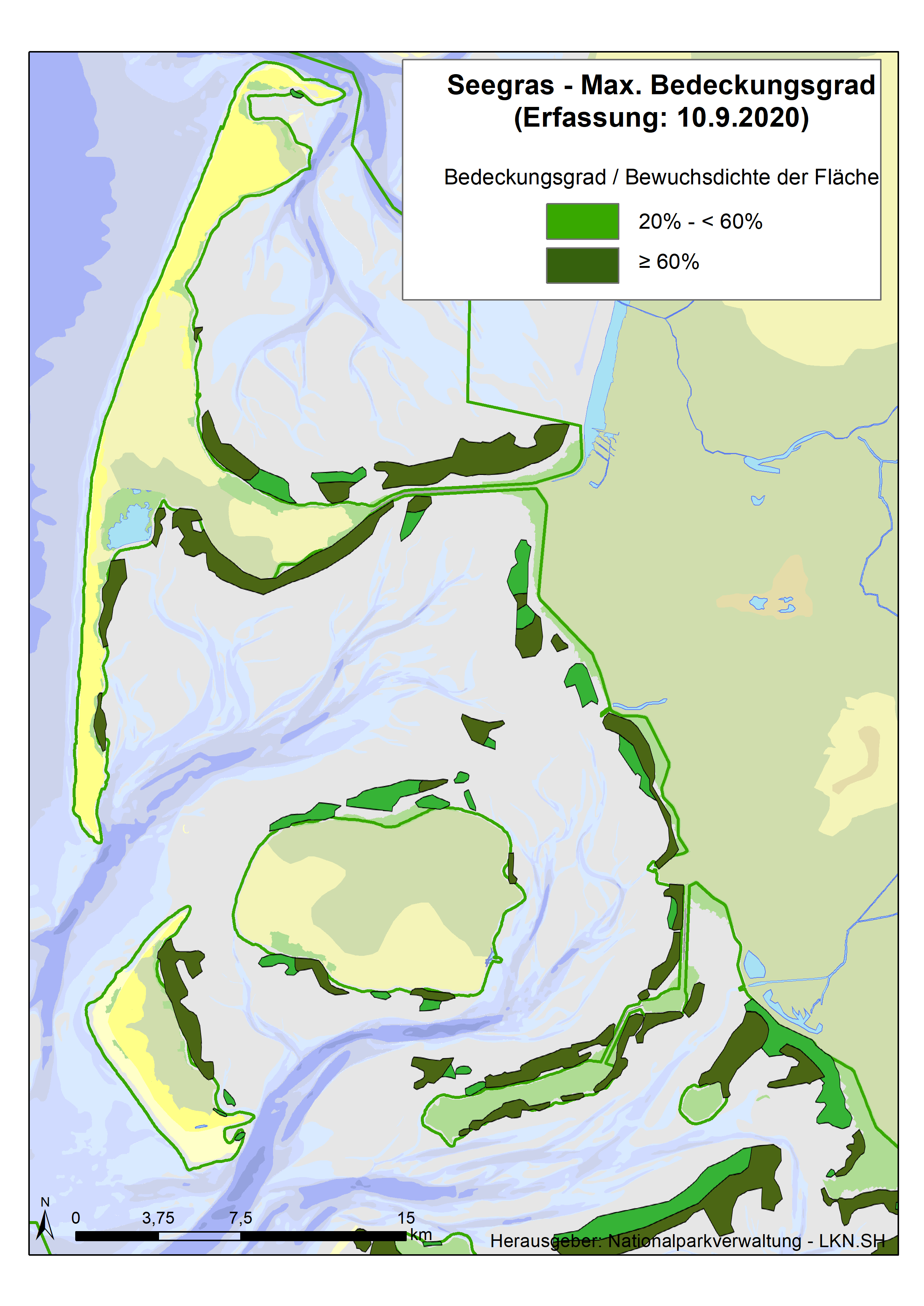
Der Download-Dienst beinhaltet folgende Eutrophierungsparameter: max. Bedeckungsgrad von Seegras bzw. Grünalgen und ist relevant für den MSRL-Deskriptor 5 im Nationalpark Schleswig-Holsteinisches Wattenmeer. Der Dienst wurde im Rahmen des Projektes MDI-DE (Marine Daten-Infrastruktur Deutschland) erstellt.
Die Daten werden im Rahmen des trilateralen Makrophyten-Monitoring-Programmes (TMAP) mittels Flugzeugkartierungen erhoben. Dieser Dienst gibt von den drei Kartierungen nur die Daten eines Fluges pro Jahr aus, bei dem der Bedeckungsgrad am höchsten war. Der Bedeckungsgrad wird in 2 Dichteklassen der geschlossenen Bestände angegeben. Die Identifizierung der Flächen ist erst ab ca. 20% Deckung möglich. Die Daten wurden auf Basis einzelner Shapes in einer Datenbank zusammengeführt. Aus den Jahren 1989 und 1990 liegen ähnliche, aber in der Klassifikation abweichende, Kartierungen im Rahmen der Ökosystemforschung Schleswig-Holsteinsches Wattenmeer vor.
Dieser Dienst stellt sowohl für Seegras als auch für Grünalgen je eine Gesamttabelle ab dem Jahr 1994 bereit, also auch einzelne Jahreslayer: Seegras: ZOS_ALLYEARS_MAXCOVab1994 und Grünalgen: GRALG_ALLYEARS_MAXCOVab1994.
Übergeordnete Metadaten für Daten, die speziell für Geodienste bereitgestellt wurden. Die Daten basieren in der Regel auf Monitoring-Daten im schleswig-holsteinischen Wattenmeer. Es werden sowohl aufbereitete Rohdaten, als auch auf ökologische Fragestellungen angepasste Daten bzw. Dienste bereitgestellt, die aus Datenbank-Abfragen generiert wurden.
In dieser Serie "Daten-fuer-Dienste" enthalten sind die Metadaten folgender dienstbezogener Datensätze:
- Brandgänse: Mauserbestand und Vorkommen ab 2010 - Kegelrobben: Liegeplätze ab 2005 - Kegelrobben: Ruheplätze ab 1989 - Makrophyten-Monitoring: allg. Vorkommen von Seegras und Grünalgen ab 1994 - Menschliche Aktivitäten und Belastungen - MSRL:D5-Eutrophierung: max. Bedeckung von Seegras bzw. Grünalgen pro Jahr - MSRL:D10-Strandmüllmonitoring an der dt. Nordseeküste - Robben: Monitoring: alle Sichtungen während des Robbenmonitorings von Seehunden und Kegelrobben - Seehunde: Liegeplätze ab 1989 - Seehunde: Ruheplätze ab 1989