TMAP parameter group: Counts of breeding birds (BREB). Counts of several species of breeding birds according to Wadden Sea Ecosystem3, 1995 The trilateral Monitoring and Assessment Program was established in 1994 and contains 28 chemical, biological, geological and common parameter. Analyses enable an assessment on the trilateral agreed ecological targets. Results are published as Quality status report regularly. Investigations are done with regard to the following issues of concern primarily (Kellermann, A. et al. 1994): - Effects of climate change on the morphology, - Effects of pollutant inputs (nutrients and contaminants) on processes, species and communities, - Effects of fisheries on species and communities, - Effects of recreational activities on species, - Effects of agricultural utilization on salt marsh communities.
TMAP parameter group: Counts of breeding birds (BREB). Counts of several species of breeding birds according to Wadden Sea Ecosystem3, 1995 The trilateral Monitoring and Assessment Program was established in 1994 and contains 28 chemical, biological, geological and common parameter. Analyses enable an assessment on the trilateral agreed ecological targets. Results are published as Quality status report regularly. Investigations are done with regard to the following issues of concern primarily (Kellermann, A. et al. 1994): - Effects of climate change on the morphology, - Effects of pollutant inputs (nutrients and contaminants) on processes, species and communities, - Effects of fisheries on species and communities, - Effects of recreational activities on species, - Effects of agricultural utilization on salt marsh communities.
TMAP parameter group: Counts of breeding birds (BREB). Counts of several species of breeding birds according to Wadden Sea Ecosystem3, 1995 The trilateral Monitoring and Assessment Program was established in 1994 and contains 28 chemical, biological, geological and common parameter. Analyses enable an assessment on the trilateral agreed ecological targets. Results are published as Quality status report regularly. Investigations are done with regard to the following issues of concern primarily (Kellermann, A. et al. 1994): - Effects of climate change on the morphology, - Effects of pollutant inputs (nutrients and contaminants) on processes, species and communities, - Effects of fisheries on species and communities, - Effects of recreational activities on species, - Effects of agricultural utilization on salt marsh communities.
TMAP parameter group: Counts of breeding birds (BREB). Counts of several species of breeding birds according to Wadden Sea Ecosystem3, 1995 The trilateral Monitoring and Assessment Program was established in 1994 and contains 28 chemical, biological, geological and common parameter. Analyses enable an assessment on the trilateral agreed ecological targets. Results are published as Quality status report regularly. Investigations are done with regard to the following issues of concern primarily (Kellermann, A. et al. 1994): - Effects of climate change on the morphology, - Effects of pollutant inputs (nutrients and contaminants) on processes, species and communities, - Effects of fisheries on species and communities, - Effects of recreational activities on species, - Effects of agricultural utilization on salt marsh communities.
TMAP parameter group: Counts of breeding birds (BREB). Counts of several species of breeding birds according to Wadden Sea Ecosystem3, 1995 The trilateral Monitoring and Assessment Program was established in 1994 and contains 28 chemical, biological, geological and common parameter. Analyses enable an assessment on the trilateral agreed ecological targets. Results are published as Quality status report regularly. Investigations are done with regard to the following issues of concern primarily (Kellermann, A. et al. 1994): - Effects of climate change on the morphology, - Effects of pollutant inputs (nutrients and contaminants) on processes, species and communities, - Effects of fisheries on species and communities, - Effects of recreational activities on species, - Effects of agricultural utilization on salt marsh communities.
TMAP parameter group: Counts of breeding birds (BREB). Counts of several species of breeding birds according to Wadden Sea Ecosystem3, 1995 The trilateral Monitoring and Assessment Program was established in 1994 and contains 28 chemical, biological, geological and common parameter. Analyses enable an assessment on the trilateral agreed ecological targets. Results are published as Quality status report regularly. Investigations are done with regard to the following issues of concern primarily (Kellermann, A. et al. 1994): - Effects of climate change on the morphology, - Effects of pollutant inputs (nutrients and contaminants) on processes, species and communities, - Effects of fisheries on species and communities, - Effects of recreational activities on species, - Effects of agricultural utilization on salt marsh communities.
TMAP parameter group: Counts of breeding birds (BREB). Counts of several species of breeding birds according to Wadden Sea Ecosystem3, 1995 The trilateral Monitoring and Assessment Program was established in 1994 and contains 28 chemical, biological, geological and common parameter. Analyses enable an assessment on the trilateral agreed ecological targets. Results are published as Quality status report regularly. Investigations are done with regard to the following issues of concern primarily (Kellermann, A. et al. 1994): - Effects of climate change on the morphology, - Effects of pollutant inputs (nutrients and contaminants) on processes, species and communities, - Effects of fisheries on species and communities, - Effects of recreational activities on species, - Effects of agricultural utilization on salt marsh communities.
TMAP parameter group: Counts of breeding birds (BREB). Counts of several species of breeding birds according to Wadden Sea Ecosystem3, 1995 The trilateral Monitoring and Assessment Program was established in 1994 and contains 28 chemical, biological, geological and common parameter. Analyses enable an assessment on the trilateral agreed ecological targets. Results are published as Quality status report regularly. Investigations are done with regard to the following issues of concern primarily (Kellermann, A. et al. 1994): - Effects of climate change on the morphology, - Effects of pollutant inputs (nutrients and contaminants) on processes, species and communities, - Effects of fisheries on species and communities, - Effects of recreational activities on species, - Effects of agricultural utilization on salt marsh communities.
TMAP parameter group: Counts of breeding birds (BREB). Counts of several species of breeding birds according to Wadden Sea Ecosystem3, 1995 The trilateral Monitoring and Assessment Program was established in 1994 and contains 28 chemical, biological, geological and common parameter. Analyses enable an assessment on the trilateral agreed ecological targets. Results are published as Quality status report regularly. Investigations are done with regard to the following issues of concern primarily (Kellermann, A. et al. 1994): - Effects of climate change on the morphology, - Effects of pollutant inputs (nutrients and contaminants) on processes, species and communities, - Effects of fisheries on species and communities, - Effects of recreational activities on species, - Effects of agricultural utilization on salt marsh communities.
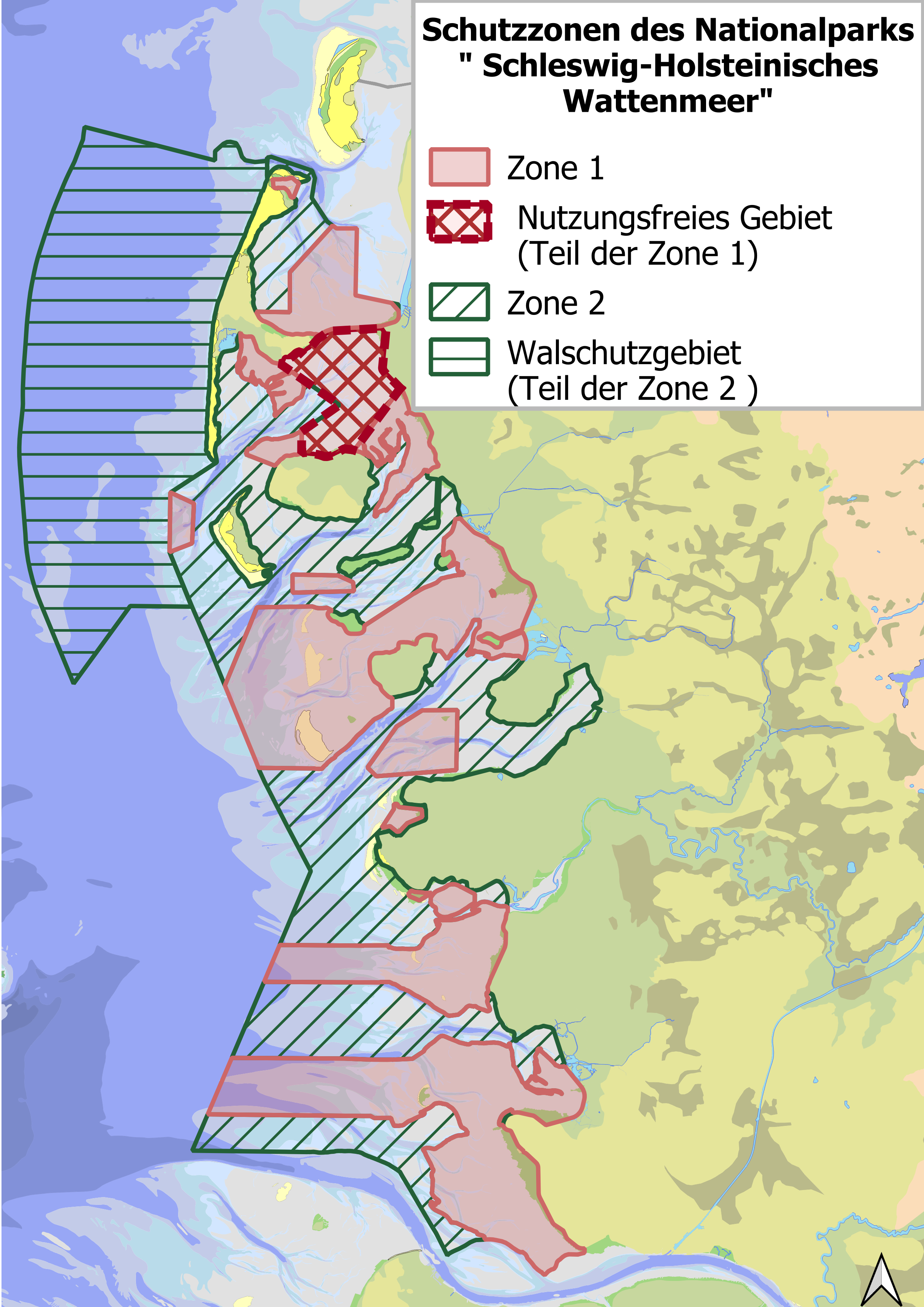
Mit diesem Datensatz wird die Zonierung des Nationalparks „Schleswig-Holsteinisches Wattenmeer“ bereitgestellt. Der Nationalpark wurde 1985 gegründet und 1999 erweitert. Er dient dem Schutz und der natürlichen Entwicklung des schleswig-holsteinischen Wattenmeeres und der Bewahrung seiner besonderen Eigenart. Die Gesamtheit der Natur in ihrer natürlichen Entwicklung mit allen Pflanzen, Tieren und Ökosystemen besitzt einen zu schützenden Eigenwert (§ 2 Abs. 1 Nationalparkgesetz). Um einen möglichst ungestörten Ablauf der Naturvorgänge zu gewährleisten wurde der Nationalpark in zwei Schutzzonen eingeteilt (Schutzzone 1 und Schutzzone 2), die mit verschiedenen Schutzbestimmungen versehen sind. Schutzzone 1 darf u.a. nicht betreten werden und beinhaltet ein nutzungsfreies Gebiet zwischen Sylt und Föhr. Schutzzone 2 darf eingeschränkt genutzt werden. Die Einteilung des Nationalparks in diese zwei Schutzzonen wird durch § 4 des Nationalparkgesetzes geregelt (Gesetz zum Schutz des schleswig-holsteinischen Wattenmeeres (Nationalparkgesetz – NPG vom 17. Dezember 1999 zuletzt geändert mit Verordnung vom 16.1.2019 (GVOBl. Schl.-H. S. 30)). Die dynamische Anpassung der Schutzzonen in den Kartendarstellungen ist aufgrund der sog. Schutzzonen-Verordnung möglich (Schutzzonenverordnung Nationalpark Schleswig-Holsteinisches Wattenmeer – SchutzzonenVO vom 4. Dezember 2017 (GVOBl. Schl.-H. v. 21.12.2017, S. 556)). Download der Gesetzestexte s. unten. Für eine Darstellung des Nationalpark-Gebietes ohne die Differenzierung nach Schutzzonen wird ein weiterer Datensatz mit der Lage der Außengrenzen zur Verfügung gestellt: Nationalpark Schleswig-Holsteinisches Wattenmeer Außengrenzen des Nationalparks (LKN.SH - NPV) Objekt-ID: CF2A1A52-EC3B-4837-91E3-DDC6A8CD84FA. Alle hier erwähnten Daten zum Nationalpark sind Auszüge aus einem Gesamtdatensatz: Rechtliche Gliederung des Nationalparks mit den angrenzenden Gebieten, Stand 12/2017 Kr. 11/2019 (Objekt-ID:5f2aeb4f-a5ec-4a0d-8a11-9f90fe4c7bee).