TMAP parameter group: Measurement of organic micro pollutants in sediment (in CD). Organic compounds contamination in sediment The trilateral Monitoring and Assessment Program was established in 1994 and contains 28 chemical, biological, geological and common parameter. Analyses enable an assessment on the trilateral agreed ecological targets. Results are published as Quality status report regularly. Investigations are done with regard to the following issues of concern primarily (Kellermann, A. et al. 1994): - Effects of climate change on the morphology, - Effects of pollutant inputs (nutrients and contaminants) on processes, species and communities, - Effects of fisheries on species and communities, - Effects of recreational activities on species, - Effects of agricultural utilization on salt marsh communities.
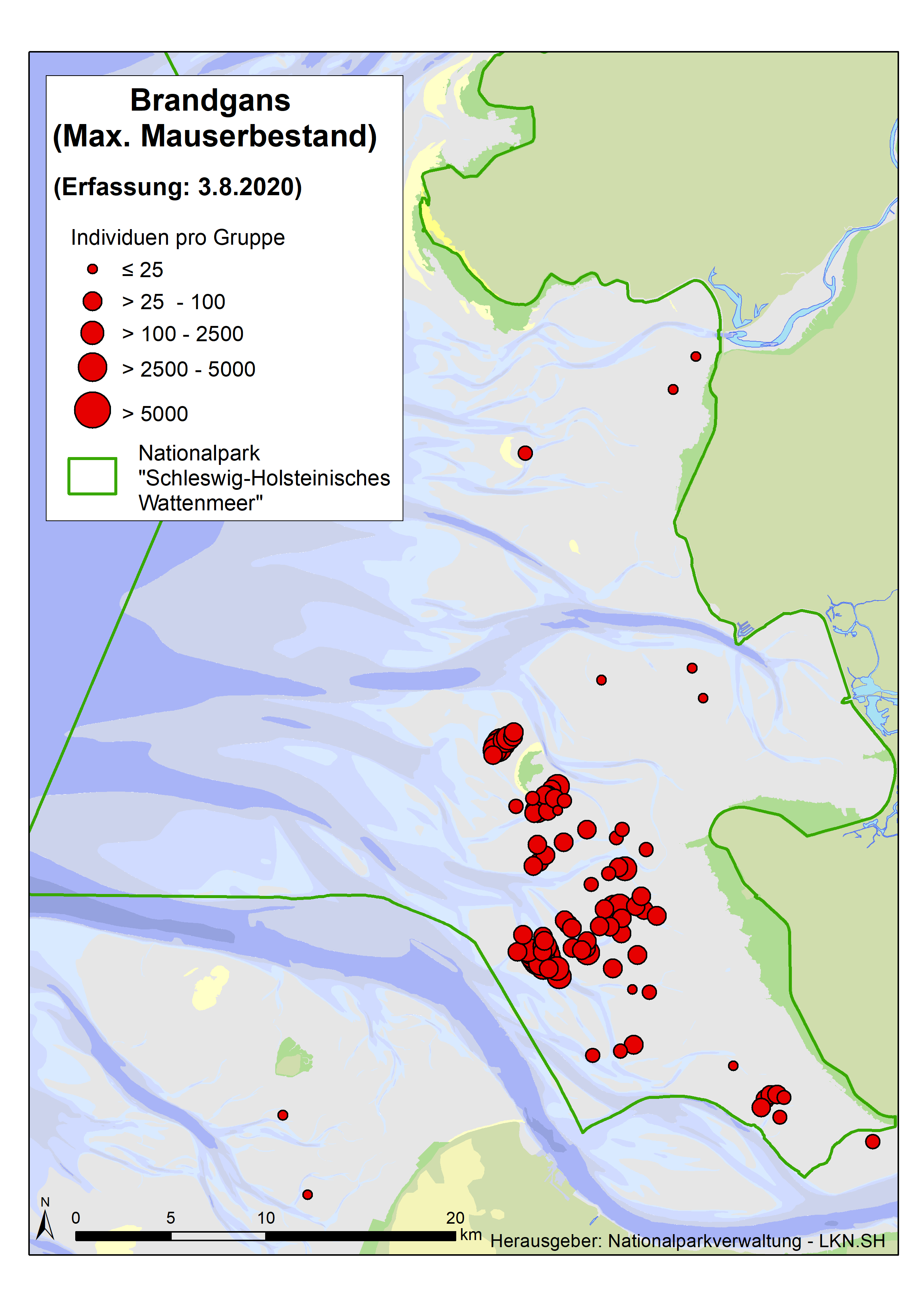
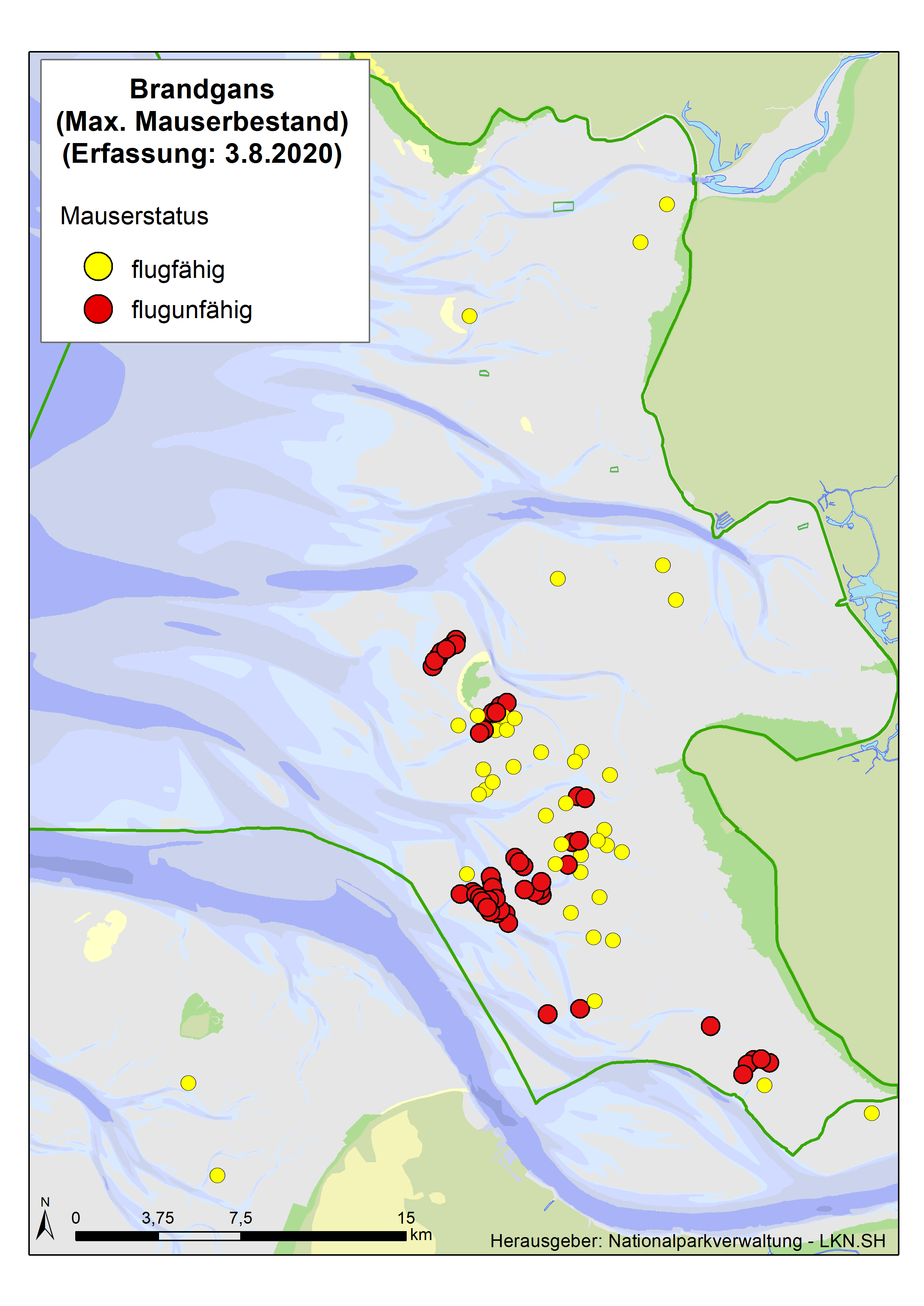
Darstellungs-Dienst zum Vorkommen von Brandgänsen im Bereich des Nationalparks Schleswig-Holsteinisches Wattenmeer pro Jahr (gerade Jahre). In diesem Dienst werden die Daten des Flugtages mit dem maximalen Mauserbestand pro Jahr auf zwei verschiedende Arten dargestellt: 1) klassifiziert nach Anzahlen der rastenden Brandgänse pro Jahr; Verteilung und Häufigkeit 2) klassifiziert nach Mauserstatus der rastenden Brandgänse pro Jahr; Verteilung der flugfähigen und nicht flugfähigen Individuen, keine Aussage über Häufigkeit
Zudem werden während der Eiderenten-Zählung Wasserfahrzeuge und Personen im Watt mit erfasst, um potentielle Störquelle zu identfizieren und die Verteilung der Enten besser interpretieren zu können. Daher werden die Daten hier für den entsprechenden Flugtag mit der max. Bestandszahl für jedes Untersuchungsjahr angeboten.
Generelle Informationen zum Brandgans-Monitoring: Brandgänse sind im Sommer für einige Wochen flugunfähig und in der Mauserzeit besonders störanfällig. Das Brandgans-Monitoring findet in diesem Mauserzeitraum in den Monaten Juli – September statt und gibt Auskunft über die räumliche und zeitliche Verteilung der Brandgänse. Die Bedeutung und Veränderung der wichtigsten Mausergebiete kann abgeschätzt und im Hinblick auf potentielle Störquellen bewertet werden. Aus den Daten lassen sich ebenfalls Abschätzungen zu Bestandsgrößen ableiten. Zudem kann in den Daten zwischen flugfähigen und nicht flugfähigen Brandgänsen unterschieden werden.
TMAP parameter group: Measurement of inorganic nutrients in water (in CD). Nutrients in water The trilateral Monitoring and Assessment Program was established in 1994 and contains 28 chemical, biological, geological and common parameter. Analyses enable an assessment on the trilateral agreed ecological targets. Results are published as Quality status report regularly. Investigations are done with regard to the following issues of concern primarily (Kellermann, A. et al. 1994): - Effects of climate change on the morphology, - Effects of pollutant inputs (nutrients and contaminants) on processes, species and communities, - Effects of fisheries on species and communities, - Effects of recreational activities on species, - Effects of agricultural utilization on salt marsh communities.
TMAP parameter group: Measurement of inorganic nutrients in water (in CD). Nutrients in water The trilateral Monitoring and Assessment Program was established in 1994 and contains 28 chemical, biological, geological and common parameter. Analyses enable an assessment on the trilateral agreed ecological targets. Results are published as Quality status report regularly. Investigations are done with regard to the following issues of concern primarily (Kellermann, A. et al. 1994): - Effects of climate change on the morphology, - Effects of pollutant inputs (nutrients and contaminants) on processes, species and communities, - Effects of fisheries on species and communities, - Effects of recreational activities on species, - Effects of agricultural utilization on salt marsh communities.
TMAP parameter group: Measurement of inorganic nutrients in water (in CD). Nutrients in water The trilateral Monitoring and Assessment Program was established in 1994 and contains 28 chemical, biological, geological and common parameter. Analyses enable an assessment on the trilateral agreed ecological targets. Results are published as Quality status report regularly. Investigations are done with regard to the following issues of concern primarily (Kellermann, A. et al. 1994): - Effects of climate change on the morphology, - Effects of pollutant inputs (nutrients and contaminants) on processes, species and communities, - Effects of fisheries on species and communities, - Effects of recreational activities on species, - Effects of agricultural utilization on salt marsh communities.
TMAP parameter group: Measurement of inorganic nutrients in water (in CD). Nutrients in water The trilateral Monitoring and Assessment Program was established in 1994 and contains 28 chemical, biological, geological and common parameter. Analyses enable an assessment on the trilateral agreed ecological targets. Results are published as Quality status report regularly. Investigations are done with regard to the following issues of concern primarily (Kellermann, A. et al. 1994): - Effects of climate change on the morphology, - Effects of pollutant inputs (nutrients and contaminants) on processes, species and communities, - Effects of fisheries on species and communities, - Effects of recreational activities on species, - Effects of agricultural utilization on salt marsh communities.
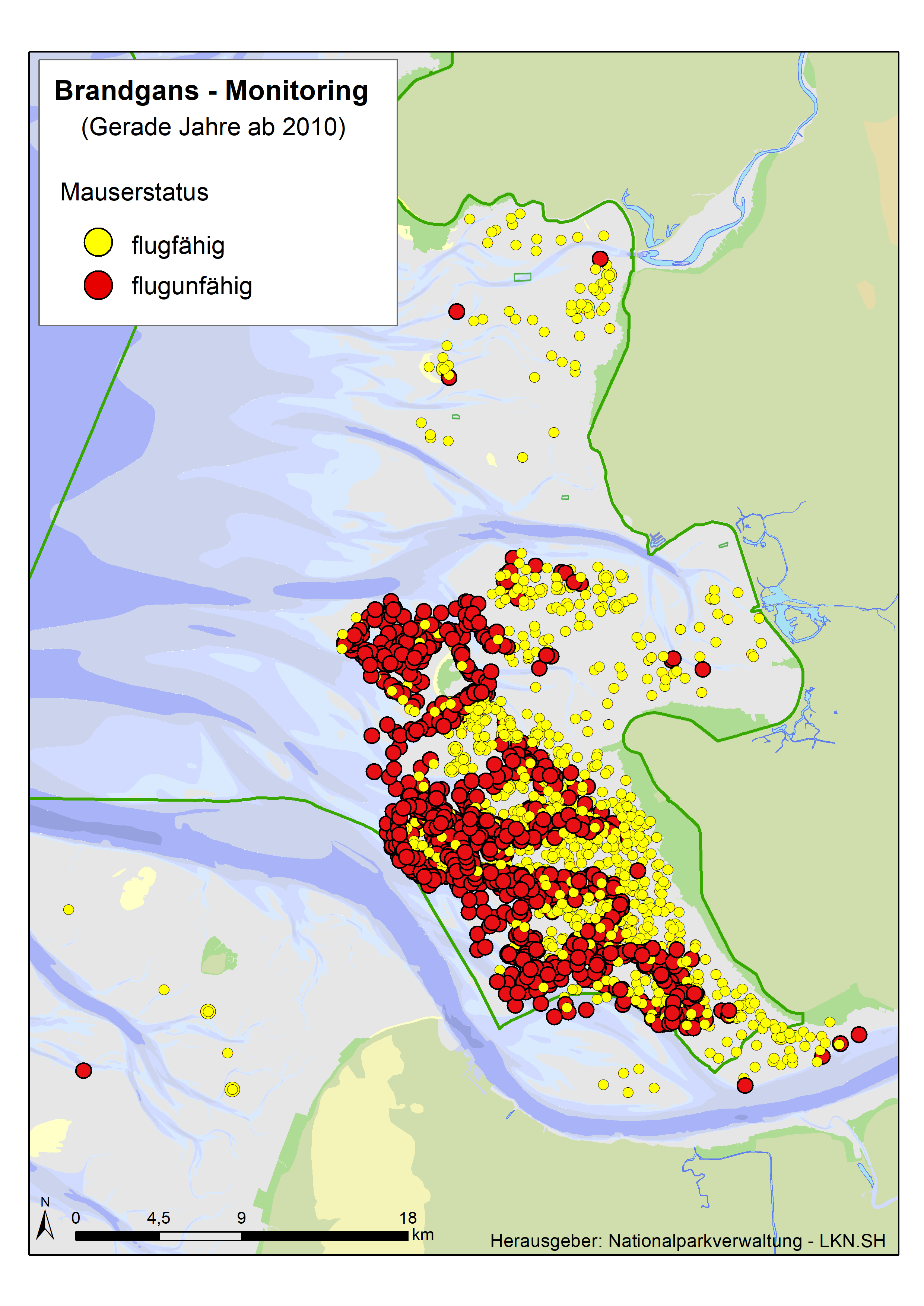
Dieser dienstbezogene Datenbestand für einen WFS-Download-Dienst stellt ab 2010 das Vorkommen und die Individuenanzahlen der mausernden Brandgänse aus Zählflügen im Bereich des Nationalparks Schleswig-Holsteinisches Wattenmeer zur Verfügung. Brandgänse sind während der Mauserzeit im Sommer für einige Wochen flugunfähig und daher besonders störanfällig. Zu dieser Zeit (in den Monaten Juli – September) findet das Brandgans-Monitoring mit 3 flächendeckenden Erfassungsflügen im schleswig-holsteinischen Wattenmeer statt und gibt Auskunft über die räumliche und zeitliche Verteilung der Brandgänse. Die Bedeutung und Veränderung der wichtigsten Mausergebiete kann abgeschätzt und im Hinblick auf potentielle Störquellen bewertet werden. Aus den Daten lassen sich ebenfalls Abschätzungen zu Bestandsgrößen ableiten. Zudem kann in den Daten zwischen flugfähigen und nicht flugfähigen Brandgänsen unterschieden werden.
Dieser Geodatensatz des Brandgans-Monitorings enthält die Daten aller drei Flüge eines geraden Jahres ab 2010 (d.h. 2010, 2012, usw.), so dass die Variabilität des Mauservorkommens abgebildet werden kann (UIG relevant). Diese Daten dienen als Basis, um den maximalen Mauserbestand eines Jahres zu ermitteln (Objekt-ID: 4C3761C7-FD30-4A24-966E-166C01B9F2AB) Die genannten Daten können über den zugehörigen Dienst "(WFS) Brandgänse" (Objekt-ID:B837BEA3-DAA2-448D-946C-3B75255CBB14) abgerufen werden.
TMAP parameter group: Measurement of organic micro pollutants in sediment (in CD). Organic compounds contamination in sediment The trilateral Monitoring and Assessment Program was established in 1994 and contains 28 chemical, biological, geological and common parameter. Analyses enable an assessment on the trilateral agreed ecological targets. Results are published as Quality status report regularly. Investigations are done with regard to the following issues of concern primarily (Kellermann, A. et al. 1994): - Effects of climate change on the morphology, - Effects of pollutant inputs (nutrients and contaminants) on processes, species and communities, - Effects of fisheries on species and communities, - Effects of recreational activities on species, - Effects of agricultural utilization on salt marsh communities.
TMAP parameter group: Measurement of inorganic nutrients in water (in CD). Nutrients in water The trilateral Monitoring and Assessment Program was established in 1994 and contains 28 chemical, biological, geological and common parameter. Analyses enable an assessment on the trilateral agreed ecological targets. Results are published as Quality status report regularly. Investigations are done with regard to the following issues of concern primarily (Kellermann, A. et al. 1994): - Effects of climate change on the morphology, - Effects of pollutant inputs (nutrients and contaminants) on processes, species and communities, - Effects of fisheries on species and communities, - Effects of recreational activities on species, - Effects of agricultural utilization on salt marsh communities.
TMAP parameter group: Measurement of inorganic nutrients in water (in CD). Nutrients in water The trilateral Monitoring and Assessment Program was established in 1994 and contains 28 chemical, biological, geological and common parameter. Analyses enable an assessment on the trilateral agreed ecological targets. Results are published as Quality status report regularly. Investigations are done with regard to the following issues of concern primarily (Kellermann, A. et al. 1994): - Effects of climate change on the morphology, - Effects of pollutant inputs (nutrients and contaminants) on processes, species and communities, - Effects of fisheries on species and communities, - Effects of recreational activities on species, - Effects of agricultural utilization on salt marsh communities.