Aktualität der Daten:
seit 01.04.1801 , gegenwärtig aktuell
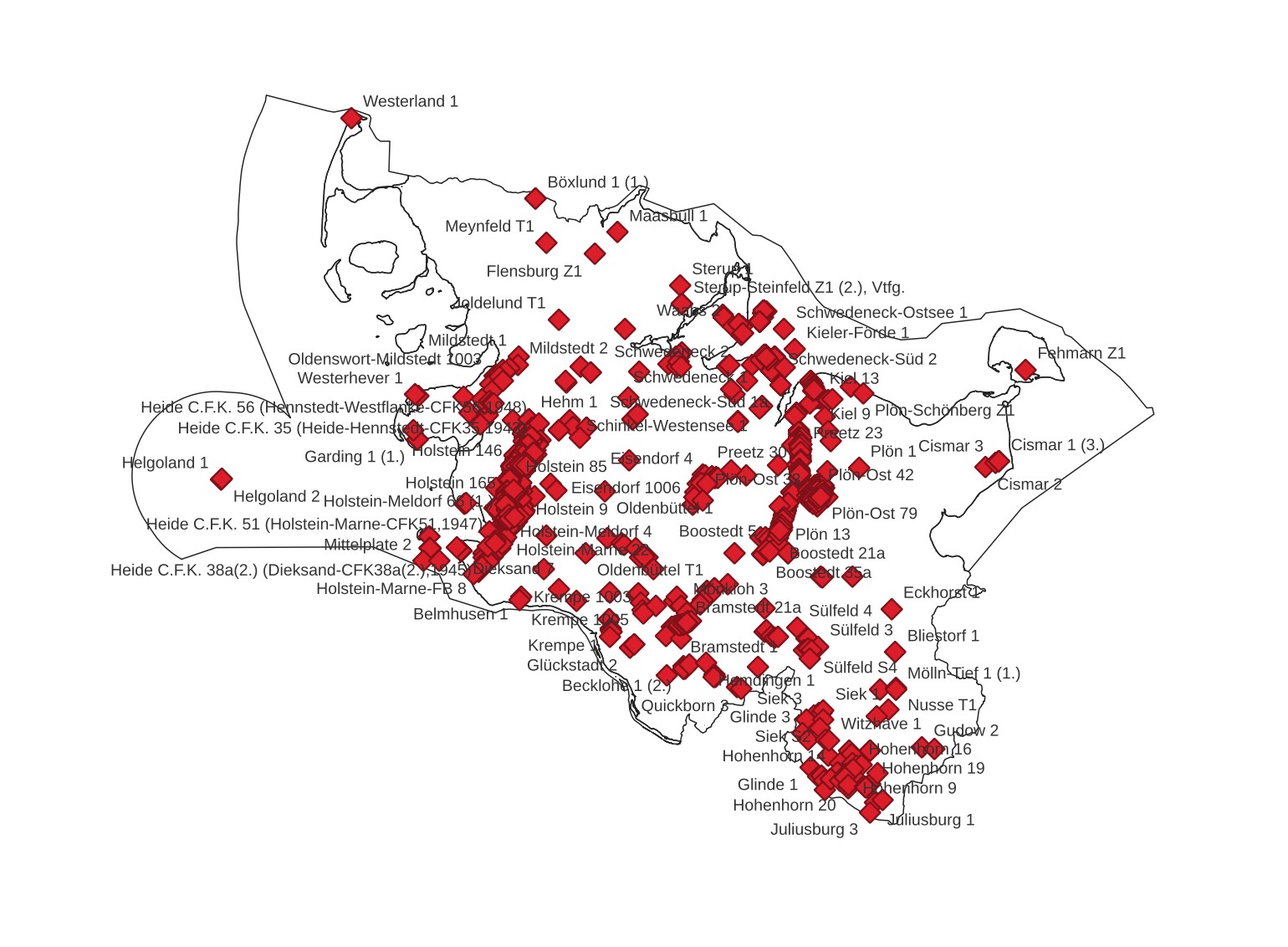
Die Abteilung Geologie und Boden des Landesamtes für Umwelt des Landes Schleswig-Holstein (LfU-SH) ist als staatlicher geologischer Dienst für Schleswig-Holstein für die Archivierung und öffentliche Bereitstellung aller im Bundesland durchgeführten Bohrungen zuständig. Dafür werden alle an das LfU-SH übermittelten Bohrungsinformationen digital erfasst und in einen einheitlichen Datenschlüssel, das SEP3 Format zur Beschreibung von Bohrungsdaten, überführt. Nach Ablauf einer Schutzfrist von in der Regel 5 Jahren sind diese geologischen Fachinformationen öffentlich bereitzustellen. Über den Datensatz „Tiefbohrungen (Bergrecht) Schleswig-Holstein“ kann der aktuelle digitale Datenbestand an Tiefbohrungen nach Bergrecht in der Bohrungsdatenbank recherchiert werden. Dies ist eine Selektion von vorwiegend von der KW-Industrie erhobenen Daten. Die Nachweisdaten wie Informationen zur Lage, dem Bohrdatum oder der Bohrtiefe sind dabei immer frei verfügbar, nach Ablauf der Schutzfrist können zusätzlich über einen Link weitere Fachinformationen zum geologischen Bohrprofil abgefragt und als PDF exportiert werden.
TMAP parameter group: Counts of breeding birds (BREB). Counts of several species of breeding birds according to Wadden Sea Ecosystem3, 1995 The trilateral Monitoring and Assessment Program was established in 1994 and contains 28 chemical, biological, geological and common parameter. Analyses enable an assessment on the trilateral agreed ecological targets. Results are published as Quality status report regularly. Investigations are done with regard to the following issues of concern primarily (Kellermann, A. et al. 1994): - Effects of climate change on the morphology, - Effects of pollutant inputs (nutrients and contaminants) on processes, species and communities, - Effects of fisheries on species and communities, - Effects of recreational activities on species, - Effects of agricultural utilization on salt marsh communities.
TMAP parameter group: Counts of migratory birds (MIGB). Counts of Migratory Birds in the Wadden Sea The trilateral Monitoring and Assessment Program was established in 1994 and contains 28 chemical, biological, geological and common parameter. Analyses enable an assessment on the trilateral agreed ecological targets. Results are published as Quality status report regularly. Investigations are done with regard to the following issues of concern primarily (Kellermann, A. et al. 1994): - Effects of climate change on the morphology, - Effects of pollutant inputs (nutrients and contaminants) on processes, species and communities, - Effects of fisheries on species and communities, - Effects of recreational activities on species, - Effects of agricultural utilization on salt marsh communities.
TMAP parameter group: Counts of breeding birds (BREB). Counts of several species of breeding birds according to Wadden Sea Ecosystem3, 1995 The trilateral Monitoring and Assessment Program was established in 1994 and contains 28 chemical, biological, geological and common parameter. Analyses enable an assessment on the trilateral agreed ecological targets. Results are published as Quality status report regularly. Investigations are done with regard to the following issues of concern primarily (Kellermann, A. et al. 1994): - Effects of climate change on the morphology, - Effects of pollutant inputs (nutrients and contaminants) on processes, species and communities, - Effects of fisheries on species and communities, - Effects of recreational activities on species, - Effects of agricultural utilization on salt marsh communities.
TMAP parameter group: Counts of migratory birds (MIGB). Counts of Migratory Birds in the Wadden Sea The trilateral Monitoring and Assessment Program was established in 1994 and contains 28 chemical, biological, geological and common parameter. Analyses enable an assessment on the trilateral agreed ecological targets. Results are published as Quality status report regularly. Investigations are done with regard to the following issues of concern primarily (Kellermann, A. et al. 1994): - Effects of climate change on the morphology, - Effects of pollutant inputs (nutrients and contaminants) on processes, species and communities, - Effects of fisheries on species and communities, - Effects of recreational activities on species, - Effects of agricultural utilization on salt marsh communities.
TMAP parameter group: Counts of migratory birds (MIGB). Counts of Migratory Birds in the Wadden Sea The trilateral Monitoring and Assessment Program was established in 1994 and contains 28 chemical, biological, geological and common parameter. Analyses enable an assessment on the trilateral agreed ecological targets. Results are published as Quality status report regularly. Investigations are done with regard to the following issues of concern primarily (Kellermann, A. et al. 1994): - Effects of climate change on the morphology, - Effects of pollutant inputs (nutrients and contaminants) on processes, species and communities, - Effects of fisheries on species and communities, - Effects of recreational activities on species, - Effects of agricultural utilization on salt marsh communities.
TMAP parameter group: Counts of breeding birds (BREB). Counts of several species of breeding birds according to Wadden Sea Ecosystem3, 1995 The trilateral Monitoring and Assessment Program was established in 1994 and contains 28 chemical, biological, geological and common parameter. Analyses enable an assessment on the trilateral agreed ecological targets. Results are published as Quality status report regularly. Investigations are done with regard to the following issues of concern primarily (Kellermann, A. et al. 1994): - Effects of climate change on the morphology, - Effects of pollutant inputs (nutrients and contaminants) on processes, species and communities, - Effects of fisheries on species and communities, - Effects of recreational activities on species, - Effects of agricultural utilization on salt marsh communities.
Dieser Layer ist das Ergebnis einer Auswertung der - aktuellen (und z.T. noch alten) Biotopkartierung - Moorbodenlayer Moore_Komb 2017 (s. hierzu die Dokumentation von B. Burbaum Abt.6) - Kartierung der Hoch- und Übergangsmoore auf der Kartengrundlage TK 5 von 2009 im Auftrag des MLUR - Kartierung der FFH-Lebensraumtypen 91 D0 (prioritärer Moorwald) und FFH-LRT 91 E0(Auwälder) im Auftrag des LLUR 2007-09
Es wurden auch kleinste Moorreste berücksichtigt, die sich u.U. für eine Entwicklung im Zusammenhang mit angrenzenden Flächen z.B als Ausgleichsmaßnahmen eignen könnten.
TMAP parameter group: Counts of breeding birds (BREB). Counts of several species of breeding birds according to Wadden Sea Ecosystem3, 1995 The trilateral Monitoring and Assessment Program was established in 1994 and contains 28 chemical, biological, geological and common parameter. Analyses enable an assessment on the trilateral agreed ecological targets. Results are published as Quality status report regularly. Investigations are done with regard to the following issues of concern primarily (Kellermann, A. et al. 1994): - Effects of climate change on the morphology, - Effects of pollutant inputs (nutrients and contaminants) on processes, species and communities, - Effects of fisheries on species and communities, - Effects of recreational activities on species, - Effects of agricultural utilization on salt marsh communities.
TMAP parameter group: Counts of breeding birds (BREB). Counts of several species of breeding birds according to Wadden Sea Ecosystem3, 1995 The trilateral Monitoring and Assessment Program was established in 1994 and contains 28 chemical, biological, geological and common parameter. Analyses enable an assessment on the trilateral agreed ecological targets. Results are published as Quality status report regularly. Investigations are done with regard to the following issues of concern primarily (Kellermann, A. et al. 1994): - Effects of climate change on the morphology, - Effects of pollutant inputs (nutrients and contaminants) on processes, species and communities, - Effects of fisheries on species and communities, - Effects of recreational activities on species, - Effects of agricultural utilization on salt marsh communities.