TMAP parameter group: Counts of breeding birds (BREB). Counts of several species of breeding birds according to Wadden Sea Ecosystem3, 1995 The trilateral Monitoring and Assessment Program was established in 1994 and contains 28 chemical, biological, geological and common parameter. Analyses enable an assessment on the trilateral agreed ecological targets. Results are published as Quality status report regularly. Investigations are done with regard to the following issues of concern primarily (Kellermann, A. et al. 1994): - Effects of climate change on the morphology, - Effects of pollutant inputs (nutrients and contaminants) on processes, species and communities, - Effects of fisheries on species and communities, - Effects of recreational activities on species, - Effects of agricultural utilization on salt marsh communities.
TMAP parameter group: Counts of breeding birds (BREB). Counts of several species of breeding birds according to Wadden Sea Ecosystem3, 1995 The trilateral Monitoring and Assessment Program was established in 1994 and contains 28 chemical, biological, geological and common parameter. Analyses enable an assessment on the trilateral agreed ecological targets. Results are published as Quality status report regularly. Investigations are done with regard to the following issues of concern primarily (Kellermann, A. et al. 1994): - Effects of climate change on the morphology, - Effects of pollutant inputs (nutrients and contaminants) on processes, species and communities, - Effects of fisheries on species and communities, - Effects of recreational activities on species, - Effects of agricultural utilization on salt marsh communities.
TMAP parameter group: Counts of migratory birds (MIGB). Counts of Migratory Birds in the Wadden Sea The trilateral Monitoring and Assessment Program was established in 1994 and contains 28 chemical, biological, geological and common parameter. Analyses enable an assessment on the trilateral agreed ecological targets. Results are published as Quality status report regularly. Investigations are done with regard to the following issues of concern primarily (Kellermann, A. et al. 1994): - Effects of climate change on the morphology, - Effects of pollutant inputs (nutrients and contaminants) on processes, species and communities, - Effects of fisheries on species and communities, - Effects of recreational activities on species, - Effects of agricultural utilization on salt marsh communities.
TMAP parameter group: Counts of breeding birds (BREB). Counts of several species of breeding birds according to Wadden Sea Ecosystem3, 1995 The trilateral Monitoring and Assessment Program was established in 1994 and contains 28 chemical, biological, geological and common parameter. Analyses enable an assessment on the trilateral agreed ecological targets. Results are published as Quality status report regularly. Investigations are done with regard to the following issues of concern primarily (Kellermann, A. et al. 1994): - Effects of climate change on the morphology, - Effects of pollutant inputs (nutrients and contaminants) on processes, species and communities, - Effects of fisheries on species and communities, - Effects of recreational activities on species, - Effects of agricultural utilization on salt marsh communities.
TMAP parameter group: Counts of breeding birds (BREB). Counts of several species of breeding birds according to Wadden Sea Ecosystem3, 1995 The trilateral Monitoring and Assessment Program was established in 1994 and contains 28 chemical, biological, geological and common parameter. Analyses enable an assessment on the trilateral agreed ecological targets. Results are published as Quality status report regularly. Investigations are done with regard to the following issues of concern primarily (Kellermann, A. et al. 1994): - Effects of climate change on the morphology, - Effects of pollutant inputs (nutrients and contaminants) on processes, species and communities, - Effects of fisheries on species and communities, - Effects of recreational activities on species, - Effects of agricultural utilization on salt marsh communities.
TMAP parameter group: Counts of breeding birds (BREB). Counts of several species of breeding birds according to Wadden Sea Ecosystem3, 1995 The trilateral Monitoring and Assessment Program was established in 1994 and contains 28 chemical, biological, geological and common parameter. Analyses enable an assessment on the trilateral agreed ecological targets. Results are published as Quality status report regularly. Investigations are done with regard to the following issues of concern primarily (Kellermann, A. et al. 1994): - Effects of climate change on the morphology, - Effects of pollutant inputs (nutrients and contaminants) on processes, species and communities, - Effects of fisheries on species and communities, - Effects of recreational activities on species, - Effects of agricultural utilization on salt marsh communities.
TMAP parameter group: Counts of breeding birds (BREB). Counts of several species of breeding birds according to Wadden Sea Ecosystem3, 1995 The trilateral Monitoring and Assessment Program was established in 1994 and contains 28 chemical, biological, geological and common parameter. Analyses enable an assessment on the trilateral agreed ecological targets. Results are published as Quality status report regularly. Investigations are done with regard to the following issues of concern primarily (Kellermann, A. et al. 1994): - Effects of climate change on the morphology, - Effects of pollutant inputs (nutrients and contaminants) on processes, species and communities, - Effects of fisheries on species and communities, - Effects of recreational activities on species, - Effects of agricultural utilization on salt marsh communities.
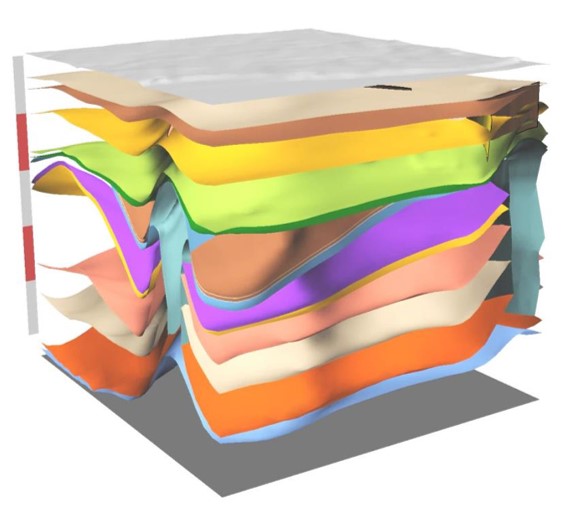
Der Geologische Dienst SH beschäftigte sich mit der 3D Modellierung und lithologischen Charakterisierung von potenziellen Reservoir- und Barrierekomplexen. Für verschiedene Strukturtypen wurden geologische 3D Modelle des Untergrundes in drei Teilgebieten konstruiert: (1) söhliche Lagerung, (2) Salzstockflanke, Synklinale, Transgressionsstruktur und (3) Antiklinalstruktur. Die Modelle bestehen aus lithostratigraphischen Grenzflächen zwischen der Geländeoberfläche und der Basis des Zechsteins und enthalten je nach Lage Störungsflächen und Hüllflächen von Salzdiapiren. Die Modelle des tieferen Untergrundes werden jeweils ergänzt durch oberflächennahe hydrostratigraphische Modelle. Die Modelle und weitere Parameter stellen realistische virtuelle Fallbeispiele dar, die auf andere Gebiete des NW-Deutschen Beckens übertragbar sind und weiterführenden Studien dienen. Die Daten sind Grundlage für Risikobetrachtungen und wichtiger Bestandteil von Studien zur Untersuchung von Monitoring-Methoden oder numerischen Prozess-Simulationen.
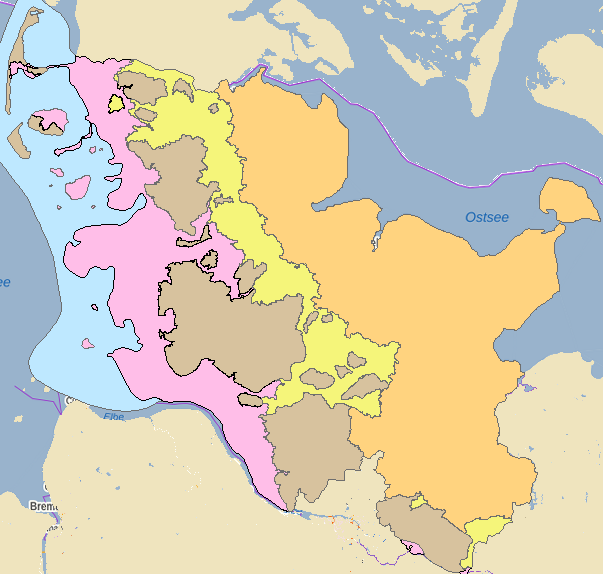
Es wird die flächenhafte Verbreitung der bekannten Hauptnaturräume Marsch, Hohe Geest, Vorgeest, Östliches Hügelland und Watt dargestellt. Die Elbaue bei Geesthacht und Lauenburg wird der Marsch zugeschlagen. Die Mindestflächengröße beträgt ca. 600 ha. Anders als bei Meynen und Schmithüsen oder nach Statistikamt Nord liegen der Karte ausschließlich geowissenschaftliche Gegebenheiten zu Grunde.
Linienthema zur Darstellung der Grenze zwischen der atlantischen (Hauptnaturräume der Marsch, Unterelbe und Geest)und der kontinentalen (Naturräume des Hügellandes und der Mecklenburgischen Seenplatte sowie Vorland sowie der Mittelelbe-Niederung) biogeografischen Region für den Aufgabenbereich Natura 2000. Grundlage ist die naturräumliche Gliederung nach Meynen & Schmithüsen, hier die im Rahmen der landesweiten Biotopkartierung auf den Massstab 1:25.000 umgearbeiteten Grenzen der Naturräume. Weitere Modifizierung im Raum Geesthacht (Grenze atl. / kont. Für die Elbe pragmatisch bei Staustufe Geesthacht gesetzt)